
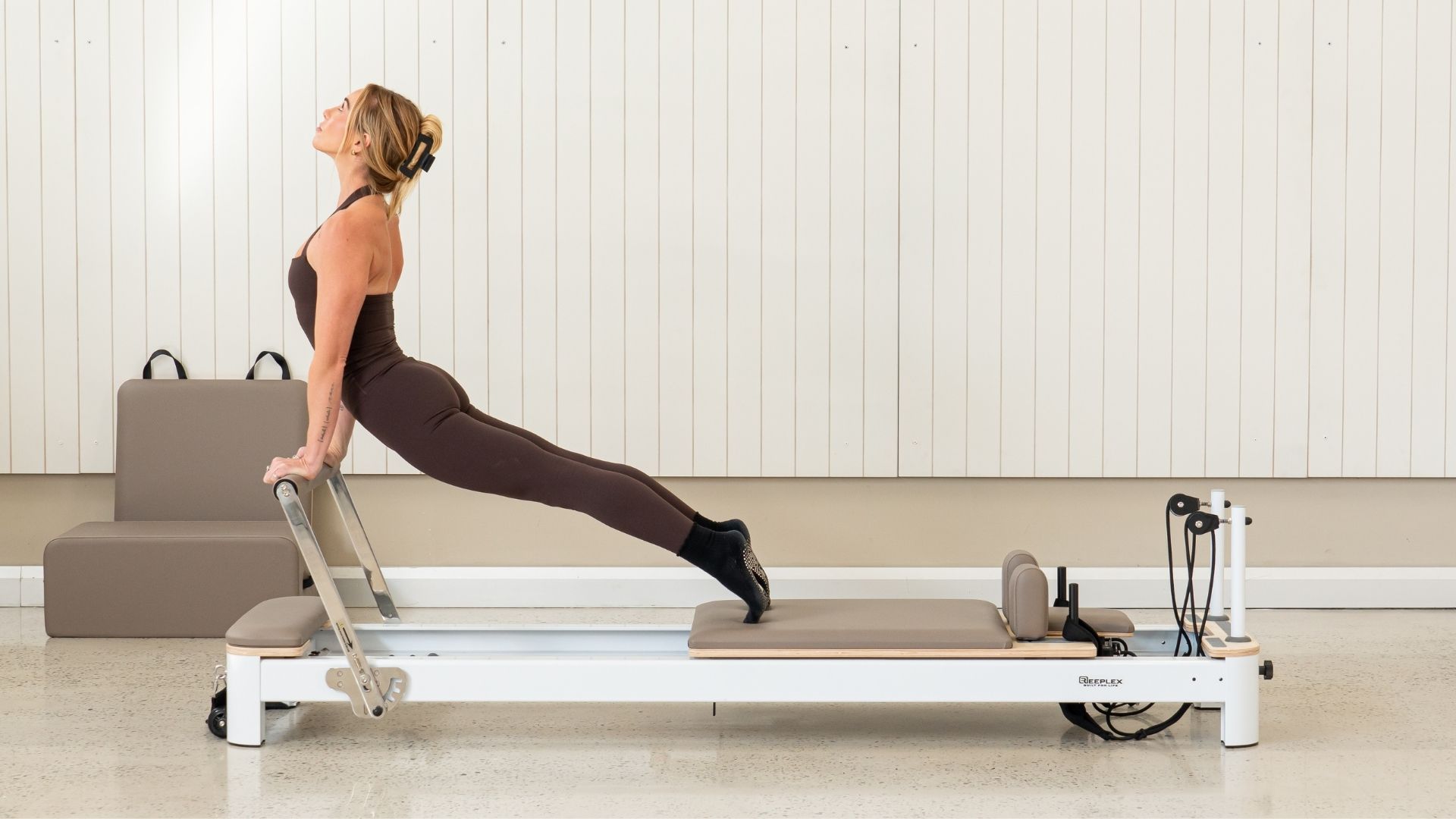
Reformer Pilates at Home: Everything You Need to Know
Reformer Pilates at Home: A Complete Guide
Studio Pilates memberships are popular but expensive and time-consuming. More Australians are now choosing to bring the studio home — investing in a pilates reformer machine for personal use and training on their own schedule without the ongoing cost of classes.
If you are considering setting up reformer Pilates at home, this guide covers everything you need to know — from choosing a machine and setting up your space to getting the most out of your practice.
Why Practice Reformer Pilates at Home?
The main advantages of home reformer training are:
- Cost savings — a home reformer eliminates ongoing studio membership costs. For regular practitioners, this represents significant savings over time
- Scheduling flexibility — train whenever suits you, for as long or as short as you like, without booking restrictions
- Privacy — train in your own space, at your own pace, without the self-consciousness that can come with group studio classes
- Family access — partners, housemates, or family members can all use the same machine
- Long-term availability — your reformer is always available, even when studios are closed, on public holidays, or during periods when you cannot leave home
How Much Space Do You Need?
A standard pilates reformer requires:
- Floor length: 240–260cm when open for use, plus 30cm clearance at each end
- Floor width: 65–75cm for the machine, plus 50cm on each side for safe mounting and dismounting
- Ceiling height: Standard room height is sufficient for almost all exercises. No special ceiling clearance is needed
If space is limited, a foldable reformer reduces the footprint significantly when stored. Most foldable models stand vertically against a wall when not in use, occupying roughly 90cm x 70cm of floor space.
What Surface is Best?
A level, stable surface is essential for safe reformer use. Options include:
- Rubber gym flooring — recommended for dedicated gym rooms. Protects the floor, reduces noise, and provides a stable surface for the machine’s feet
- Carpet — suitable if the pile is low and the carpet is firm. Deep-pile carpets can create instability
- Timber or tile floor — fine structurally but consider placing a rubber mat underneath the reformer to prevent movement and protect the floor surface
Choosing a Reformer for Home Use
The right home reformer depends on your space, budget, and training goals. Key considerations:
- Fixed frame vs foldable — fixed frames are more rigid and available in more premium options; foldable models suit smaller spaces
- Wood vs metal — wood reformers are popular for home environments due to their aesthetics; metal suits commercial and clinical settings
- Spring range — look for a model with at least four spring settings (light through heavy) to support progression
- Accessories included — check what comes standard. Box, jumpboard, and straps are common inclusions worth confirming
- Weight capacity — ensure the machine is rated for your weight with appropriate safety margin
Setting Up Your Home Reformer Space
Once your machine arrives, set it up in a space that:
- Has adequate light — you need to see what you are doing, especially when learning new exercises
- Has enough ventilation — Pilates sessions can be surprisingly warming
- Has a mirror nearby if possible — seeing your form is very helpful when learning independently
- Is free of clutter around the machine — you need clear space on all sides for full movement range
Getting Started Without a Instructor
Learning reformer Pilates independently is entirely achievable, but a few guided sessions at the start will significantly accelerate your progress. Options include:
- A few studio sessions — even three to five guided sessions will give you a solid foundation of technique and machine familiarity
- Online video platforms — there are numerous high-quality online Pilates programs specifically designed for home reformer practice
- In-store demonstrations — Dynamo Fitness showroom staff can walk you through the basic setup and key exercises when you purchase
Building a Home Reformer Routine
A well-rounded home reformer session typically includes:
- A footwork warmup series (5–10 minutes)
- Core and abdominal work
- Upper body exercises with straps
- Lower body and hip work
- Spinal articulation and stretch
Sessions of 30–60 minutes are standard. Beginners often find 30 minutes is sufficient initially, with sessions lengthening naturally as strength and technique improve.
Maintenance and Care
To keep your home reformer performing well:
- Wipe down the upholstery after each session
- Check spring attachments periodically for wear
- Keep the carriage rails free of dust and debris
- Store the machine away from direct sunlight and moisture if possible
Ready to Get Started?
Dynamo Fitness stocks a full range of pilates reformer machines for home use — from compact foldable models through to premium studio-quality reformers. Visit a showroom across Perth, Melbourne, Sydney, Brisbane, Adelaide, or the Gold Coast to try the range and get expert advice on setting up your home Pilates studio.

Dynamo Fitness Equipment