Barbell Buying Guide Australia (2026): Standard vs Olympic and Which Bar to Get
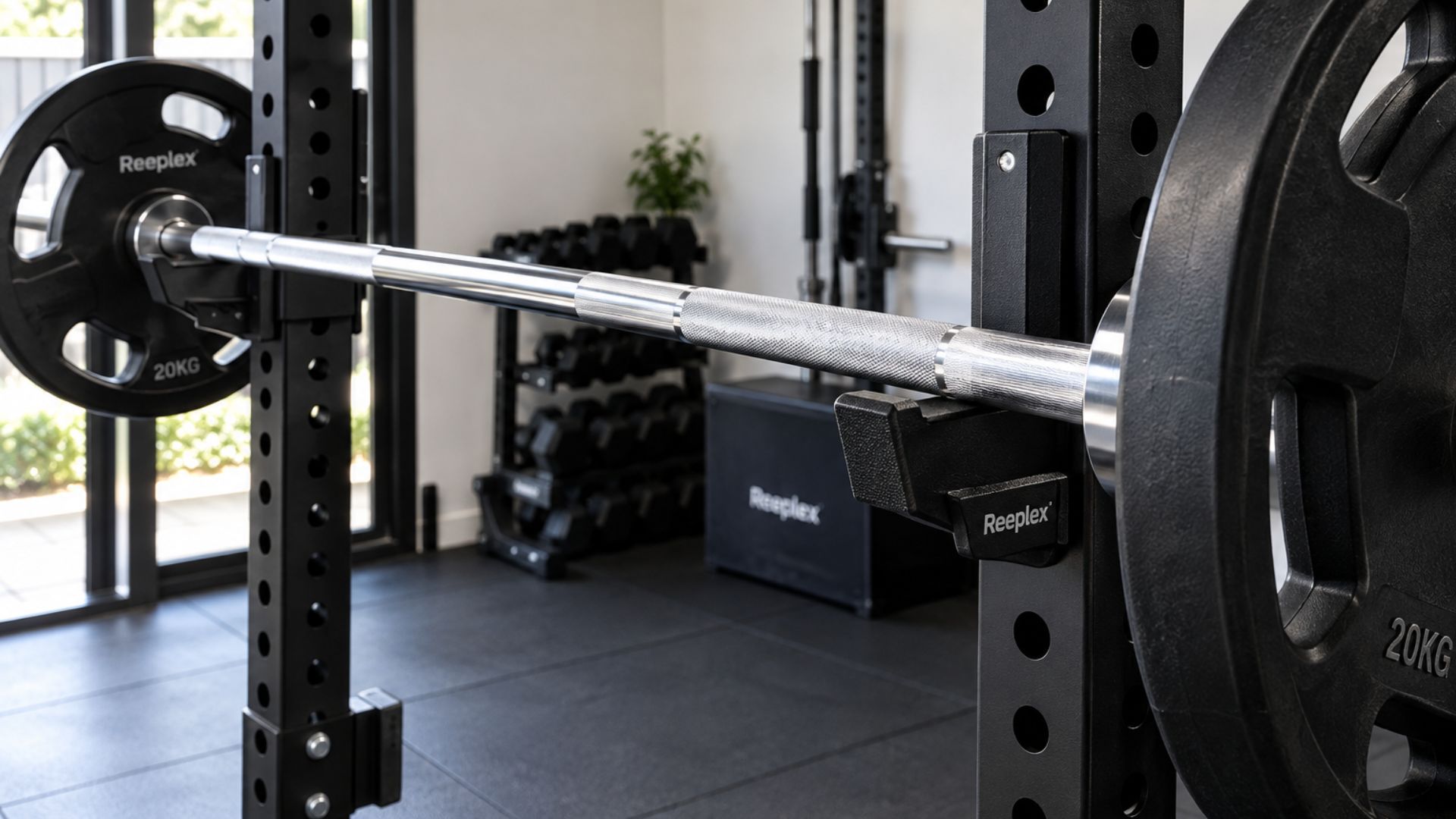
The short answer: most people building a home gym should buy a 7ft Olympic 20 kg barbell with at least a 700 lb rating — around $200 in Australia (e.g. the Reeplex 7ft Olympic 20 kg bar, $199.99). It fits every squat rack, takes every Olympic plate, and will outlast your training career. Standard (25 mm) bars from $50 suit light home use, and specialty bars — EZ curl, trap, safety squat — come later. Here’s how to choose.
Standard vs Olympic barbells: the difference that matters
| Standard barbell | Olympic barbell | |
|---|---|---|
| Sleeve diameter | 25–30 mm (plates slide onto the bar itself) | 50 mm rotating sleeves |
| Bar weight | Light — varies by length | Standardised: 20 kg (men’s), 15 kg (women’s) |
| Load capacity | Modest — fine under ~100 kg total | 700 lb (315 kg) and up |
| Fits squat racks | Often too short/thin for rack hooks | Yes — 7ft bars are the rack standard |
| Plate compatibility | Standard plates only | Olympic plates and bumpers |
| Price (AUD) | $44–$60 | $99–$500 |
| Best for | Light training, beginners on a tight budget | Anyone training long-term or using a rack |
The practical rule: if you own or plan to buy a squat rack, buy Olympic. Racks are built around the 7ft Olympic bar’s length and sleeve position, and Olympic plates hold their value far better.
Barbell types and prices in Australia (2026)
Real pricing from our current range, cheapest to dearest:
| Bar | What it’s for | Price |
|---|---|---|
| Standard EZ curl bar | Curls & extensions with standard plates | $30 |
| Standard 7ft bar | Light full-size training, standard plates | $55 |
| Olympic EZ curl bar | Arm work with Olympic plates, wrist-friendly | $79.99 |
| 5ft Olympic bar (12 kg) | Tight spaces, lighter lifters — note: too short for most racks | $99 |
| 15 kg Olympic bar, 700 lb rating | Women’s-spec bar: thinner grip, full rack length | $190 |
| 7ft Olympic 20 kg bar, 700 lb rating | The default choice for home gyms | $199.99 |
| Safety squat bar | Squatting with shoulder/wrist limitations | $249.99 |
| Multi-grip (Swiss) bar | Neutral-grip pressing, easier on shoulders | $250 |
| Hex / trap bar (30 kg) | Deadlifts with less lower-back stress | $299 |
| Commercial 20 kg multi-purpose bar | Daily heavy use, better knurl and spin | $450 |
| Commercial 20 kg power bar, 2000 lb | Powerlifting-grade stiffness and capacity | $500 |
The specs that actually matter
- Weight rating. 700 lb (≈315 kg) covers all but competitive powerlifters; 2000 lb power bars are stiffer and stay straight under years of heavy singles.
- Bar weight: 20 kg vs 15 kg. The 15 kg “women’s” bar isn’t just lighter — it has a thinner 25 mm grip that suits smaller hands. Both fit the same racks and plates.
- Length. 7ft (2.2 m) is the rack standard. Shorter 5–6ft bars save space but check they reach your rack’s J-hooks before buying.
- Knurling. More aggressive on power bars for grip on heavy pulls; smoother on multi-purpose bars for high-rep comfort. Commercial bars add a centre knurl for squats.
- Sleeves and collars. Rotating 50 mm sleeves reduce wrist torque on cleans and curls; spring clips are fine for general training, screw collars lock tighter.
- Finish and rust. In Australian garages — especially coastal — humidity is the bar killer. Wipe the bar down, brush chalk out of the knurl, and store it horizontally in the rack, not leaning in a corner.
Which barbell should you buy?
- First barbell for a home gym: the 7ft Olympic 20 kg, 700 lb bar ($199.99). One bar, every lift.
- Smaller hands or lighter starting weights: the 15 kg Olympic bar ($190) — same rating, thinner grip.
- Tight budget, light training: a standard 7ft bar ($60) with standard plates — just know you’ll outgrow it if strength is the goal.
- Second bar: an Olympic EZ curl ($79.99) for arms, or a trap bar ($299) if deadlifts bother your lower back.
- Cranky shoulders: the safety squat bar ($249.99) and multi-grip bar ($250) keep you squatting and pressing pain-free.
- Commercial gym or PT studio: the commercial multi-purpose 20 kg bar ($450) for the floor, power bars for the platforms.
You can feel the knurl and spin on all of these at Dynamo showrooms in Perth, Melbourne, Sydney, Brisbane, Gold Coast and Adelaide — or browse the full barbell range online with Australia-wide delivery.
Barbell FAQs
How much does a barbell cost in Australia?
Standard bars run $44–$60. A quality 7ft Olympic 20 kg bar costs about $200, specialty bars (trap, safety squat, Swiss) $250–$300, and commercial/powerlifting-grade bars $400–$500.
What barbell weight should I buy — 15 kg or 20 kg?
20 kg is the men’s standard and the default. Choose the 15 kg bar if you have smaller hands (its grip is thinner) or if 20 kg is too heavy a starting point for pressing movements. Both take the same plates and fit the same racks.
Do standard plates fit an Olympic barbell?
No — standard plates have a 25–30 mm hole, Olympic sleeves are 50 mm. Some machines accept both, but bars don’t. Pick one system and stick to it; Olympic is the better long-term ecosystem.
What length barbell do I need for a squat rack?
7ft (2.2 m). Shorter bars often can’t span the J-hooks on a full-width rack — if you’re buying a shorter bar for space reasons, measure your rack’s hook spacing first.
Is a trap bar better than a straight bar for deadlifts?
It’s not better or worse — it’s more upright. The neutral grip and centred load reduce lower-back shear, which makes it the smarter choice for beginners and anyone with back history. Straight-bar deadlifts remain the standard for powerlifting.

Dynamo Fitness Equipment