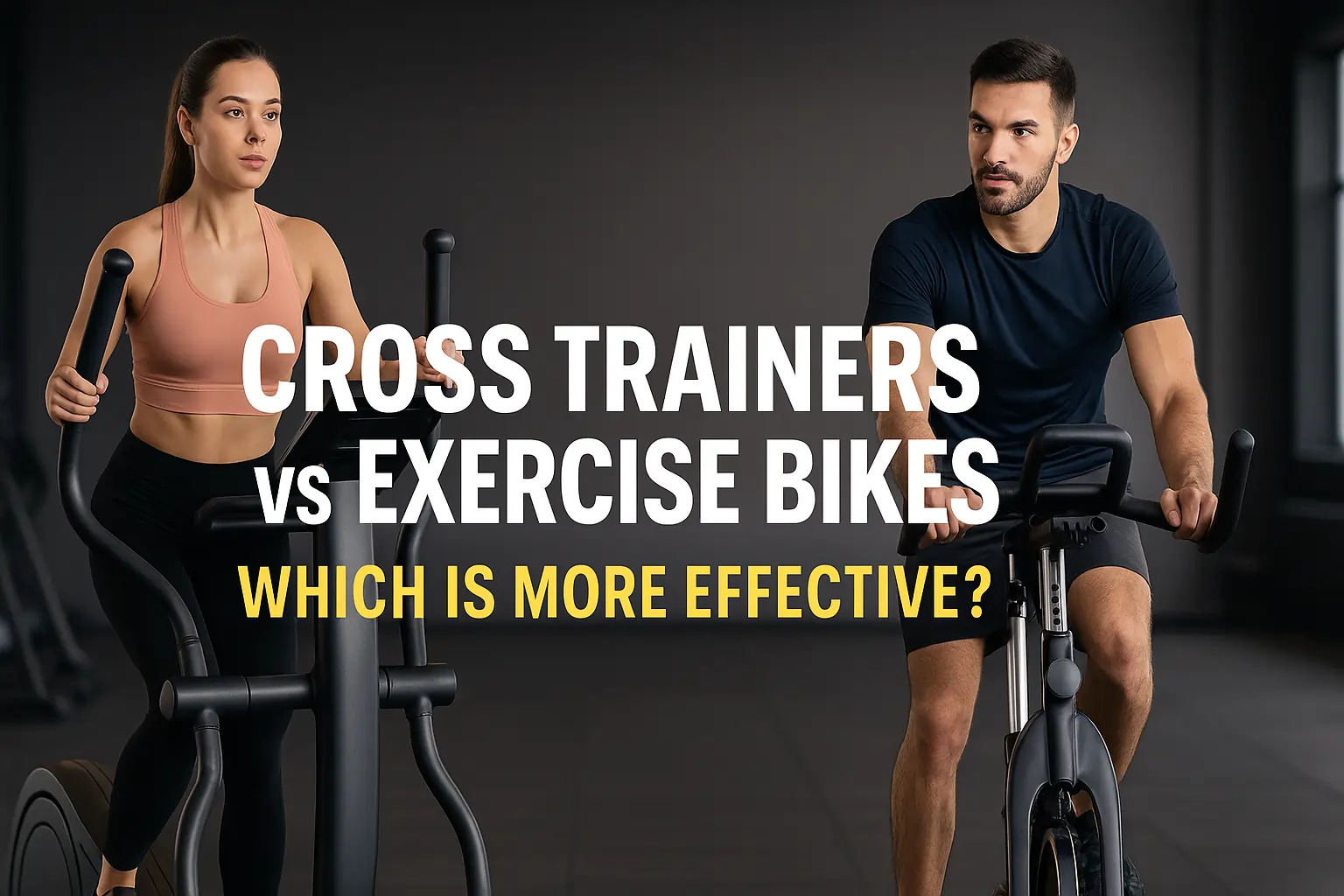
Cross Trainers vs. Exercise Bikes: Which Is More Effective?
The right cardio equipment can influence how fast you achieve your fitness goals. Many people weigh the pros and cons of cross trainers versus exercise bikes, especially when the aim includes burning fat, improving cardiovascular health, or reducing joint pressure. Both machines offer excellent benefits, yet the differences between them may decide which one suits your body, space, and routine best.
Often, individuals with limited time or knee discomfort search for a machine that combines low impact with high calorie burn. This decision can feel confusing without reliable information. Some assume any cardio equipment performs the same, while others focus only on price or popularity. However, not all cardio machines work the same way, and not every option fits every goal.
You can reduce confusion by understanding how each machine affects calorie expenditure, muscle activation, and joint comfort. While exercise bikes target the lower body through a seated position, cross trainers provide full-body activation with fluid, upright motion.
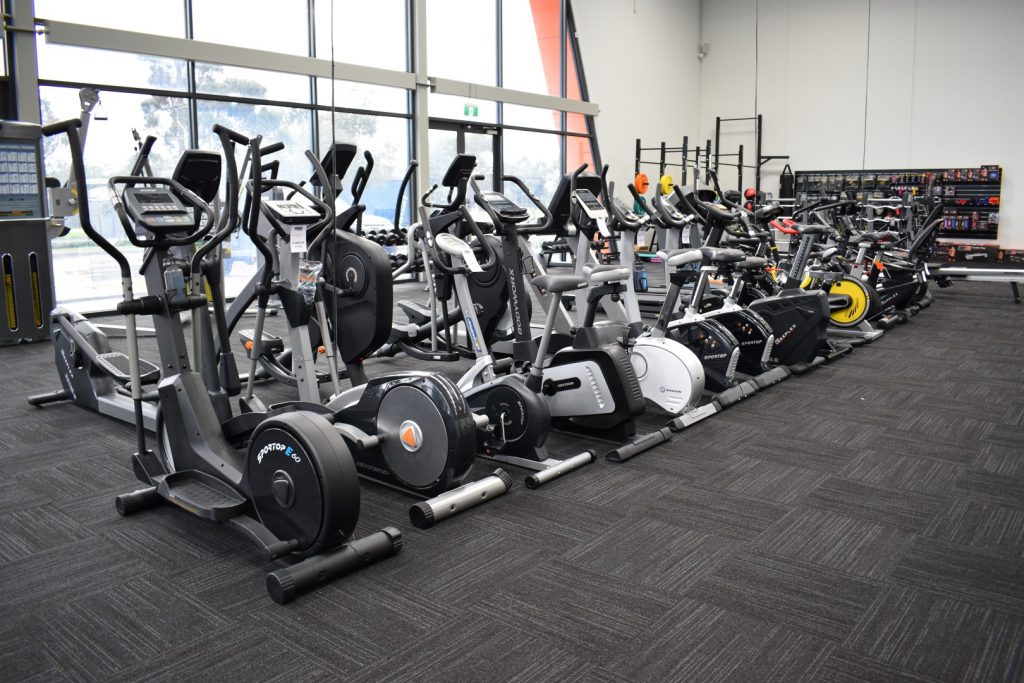
Dynamo Fitness offers both categories: full-range elliptical cross trainers designed for dynamic sessions and a curated selection of exercise bikes for compact, lower-body cardio.
TL;DR: Key Takeaways for Smart Cardio Decisions
- Elliptical cross trainers deliver approximately 15% higher metabolic output during matched moderate sessions, according to comparative trials.
- Exercise bikes provide targeted lower-body workouts with seated support, ideal for knee or hip recovery phases.
- Cross trainers engage more muscles, including arms, core, and glutes, while bikes emphasize quads, hamstrings, and calves.
- For those short on space, upright bikes offer compact footprints, though cross trainers support total-body sessions with minimal boredom.
- Dynamo Fitness stocks durable elliptical machines and a wide range of upright and recumbent bikes built for consistency, quality, and daily use.
Why It Matters: Metrics That Define “Effective” Cardio
Effectiveness in cardio training depends how tired you feel after each session. It relates to specific, measurable outputs that determine real progress. When comparing cross trainers and exercise bikes, the following performance metrics provide a clear lens through which you can evaluate your options:
- Calories burned: This reflects how much energy your body expends during the session. Higher calorie burn supports a larger energy deficit, which plays a key role in weight reduction.
- VO₂ equivalent (METs): This measures oxygen consumption and indicates aerobic intensity. A higher MET score means greater cardiovascular stimulation.
- Muscle activation (EMG readings): These track how different muscle groups respond during a workout. Full-body machines activate more areas, leading to better muscular endurance and balance.
- Joint impact / knee torque: Some cardio machines place more pressure on joints. Machines with smooth motion and upright posture tend to protect knees and hips better.
- Time efficiency: Equipment that engages more muscle groups can deliver similar results in less time.
- Space and cost: Larger machines often provide more features but need more floor area. Compact options may serve better in small rooms or apartments.
At a Glance: Quick Exercise Bikes and Cross Trainers Comparison Table
| Metric | Cross Trainer (Elliptical) | Exercise Bike (Upright, Spin, Recumbent) |
|---|---|---|
| Calories burned (per hour) | ~400–500 kcal (“can burn up to 500 calories”) | ~210–466 kcal (“can burn between 210 and 466 calories”) |
| Muscle engagement | Full body—arms, core, legs (upper and lower body) | Lower body focus—quads, hamstrings, glutes |
| Joint impact | Smooth elliptical motion, low impact on knees, hips, ankles | Seated posture with gentle pedaling, even less impact on joints |
| Space & footprint | Larger footprint due to standing stride mechanics | Compact, space-saving design for smaller rooms |
| Noise & neighbours | Relatively quiet with belt drive and no external fan system | Spin bikes with fan resistance produce more sound |
| Price & servicing | Often higher price due to advanced features and motor design | Wide price range, from budget-friendly to smart-performance models |
| User consistency & enjoyment | Supports full-body workouts with less routine fatigue | Easy to start, ideal for quick lower-body sessions |
Cross Trainers vs Exercise Bikes: A Deep Analysis
Calorie Burn Comparison
Understanding how many calories each machine helps you burn gives a clear picture of its efficiency. Harvard Medical School provides verified estimates for energy expenditure during 30-minute workouts based on body weight (≈155 lb).
The following table highlights calorie burn for both moderate and vigorous sessions.
| Equipment | Moderate (30 min, ~155 lb) | Vigorous (30 min, ~155 lb) |
|---|---|---|
| Elliptical / Cross-trainer | ~324 kcal ± 54 kcal | (Data not available) |
| Stationary Bike (Upright) | ~252 kcal ± 42 kcal | ~378 kcal ± 63 kcal |
- A moderate elliptical trainer session burns around 15% more calories than a comparable session on an upright bike (~324 kcal vs ~252 kcal).
- High-intensity cycling closes the gap or exceeds elliptical totals, but only when structured as interval training with sustained effort.
- Upright bikes excel during vigorous, goal-focused routines but demand more input for comparable output.
“Tip: to maintain an energy deficit of 500 kcal/day, using a cross-trainer saves ~30 mins weekly compared to a stationary bike.”
This data helps time-conscious users choose a machine that delivers the best return on effort without extending their sessions.
Muscle Activation – EMG & Full Body Work
Electromyography (EMG) studies measure how much different muscle groups engage during cardio. When comparing machines, muscle activation helps you understand how balanced or isolated each workout becomes.
- Ellipticals activate the core, arms, and glutes in addition to lower-body muscles. Their motor-assisted handles introduce upper-body synergy and promote full-body engagement.
- Users report a stronger contraction in the rectus femoris, external obliques, and posterior chain. This translates to better posture and improved calorie utilization per stride.
- On the other hand, stationary bikes mainly target the vastus medialis and anterior tibialis, concentrating the effort into the legs with limited upper-body contribution.
“An EMG trial shows cross-trainers increased upper-body effort by 25% per stride, compared to less than 5% on standard exercise bikes.”
Users aiming to tone multiple zones or break monotony during cardio often favor cross-trainers for their whole-body activation advantage.
Joint Impact & Knee Torque
Joint protection plays a crucial role in long-term fitness, especially for people with knee sensitivity, joint concerns, or older adults returning to exercise.
- Cross-trainers generate higher peak knee torque but at later flexion angles, which spreads the force more evenly through a full stride.
- Proper stride alignment and resistance level help reduce any localized pressure on knees, hips, and ankles.
- Stationary bikes produce lower torque peaks, mostly within the 70°–110° flexion range, and maintain seated support throughout the session.
These mechanics make ellipticals smooth yet powerful, while bikes offer a safer option for users managing recovery or easing into cardio for the first time.
- Ellipticals cushion joints but require stride awareness to prevent fatigue buildup.
- Exercise bikes keep knees aligned and reduce load, which suits physical therapy goals or beginner routines.
Efficiency – METs, VO₂, and Time
When comparing energy output, both elliptical and bike machines deliver similar cardiovascular effects at matched effort levels. A regression study from Morehead State University found that:
- Heart rate and VO₂ uptake remained similar across both machines when the Rate of Perceived Exertion (RPE) stayed consistent.
- Both machines reached up to 85% of HRmax when intensity increased, offering room to build endurance and oxygen efficiency.
- Time spent training becomes more efficient when the machine activates more muscles, reducing the need for longer sessions.
Cross-trainers offer more balanced muscular effort across the body, while upright bikes channel energy into leg muscles, leading to quicker fatigue if overused. Users who prefer shorter, intense workouts often benefit more from elliptical sessions due to greater total-body engagement per minute.
How to Choose Between Cross Trainer and Exercise Bike Based on Your Personal Criteria
Choosing the right cardio machine becomes easier when you align it with your specific goals and environment. This section helps you match your needs with the right gym equipment using a clear, goal-based flow and a smart checklist.
Goal Flowchart: Choose Based on What You Want Most
- Need to burn more calories in less time?
→ Choose a Cross Trainer for full-body movement and higher energy output. - Want to reduce pressure on your knees or hips?
→ Use a Stationary Bike with smooth pedaling and seated support. - Have limited time and need faster sessions?
→ Pick a Cross Trainer to engage more muscles per minute. - Short on space or working in a compact room?
→ Select a Recumbent or Upright Bike that fits neatly into tighter spaces.
This decision framework supports better results by helping you focus on what matters most to your fitness routine.
Smart Checklist Before You Buy
- Height and Stride Compatibility: Cross trainers with adjustable stride lengths suit taller or shorter users more comfortably.
- Adjustable Resistance: Look for machines that allow manual or digital resistance changes based on your fitness level.
- Motor or Manual Drive: Cross trainers often feature motor-assisted stride movement, while bikes may rely on user-generated resistance.
- Warranty Coverage: Equipment from Dynamo Fitness comes with solid warranties to protect your investment long-term.
Final Recommendations
Each machine offers a unique advantage. The best one depends on your fitness priorities and physical needs.
If you are looking for full-body, calorie-efficient fitness, go with a Cross Trainer. It helps you burn more calories, saves time, and trains the upper and lower body together.
If you are looking for recovery support, a quiet ride, or a compact setup, choose a Stationary Bike. It offers control, comfort, and performance in one seat-friendly solution.
Both machines serve different goals, but either can support long-term progress if you stay consistent.
Want to experience both before buying? Visit a Dynamo Fitness showroom to test machines side by side.
Speak with one of our specialists about comfort features or resistance programs. Ask how Dynamo-Plus financing plans can support your setup without delays.
[sp_easyaccordion id=”5932″]
