Pilates Reformer vs Mat Pilates: What’s the Difference?
Reformer Pilates vs Mat Pilates
If you are new to Pilates, the distinction between reformer Pilates and mat Pilates can be confusing. Both methods share the same foundational principles developed by Joseph Pilates, but the equipment, exercise range, and training experience are quite different.
This guide compares the two approaches side by side to help you understand which is right for your goals — or whether combining both might be the best approach.
What is Mat Pilates?
Mat Pilates is performed on a standard exercise mat on the floor using only your bodyweight. No equipment is required beyond the mat itself, which makes it the most accessible and affordable way to start Pilates.
Mat Pilates focuses primarily on core strength, spinal articulation, and controlled body movement. The exercises are effective but limited to what can be achieved with bodyweight alone.
What is Reformer Pilates?
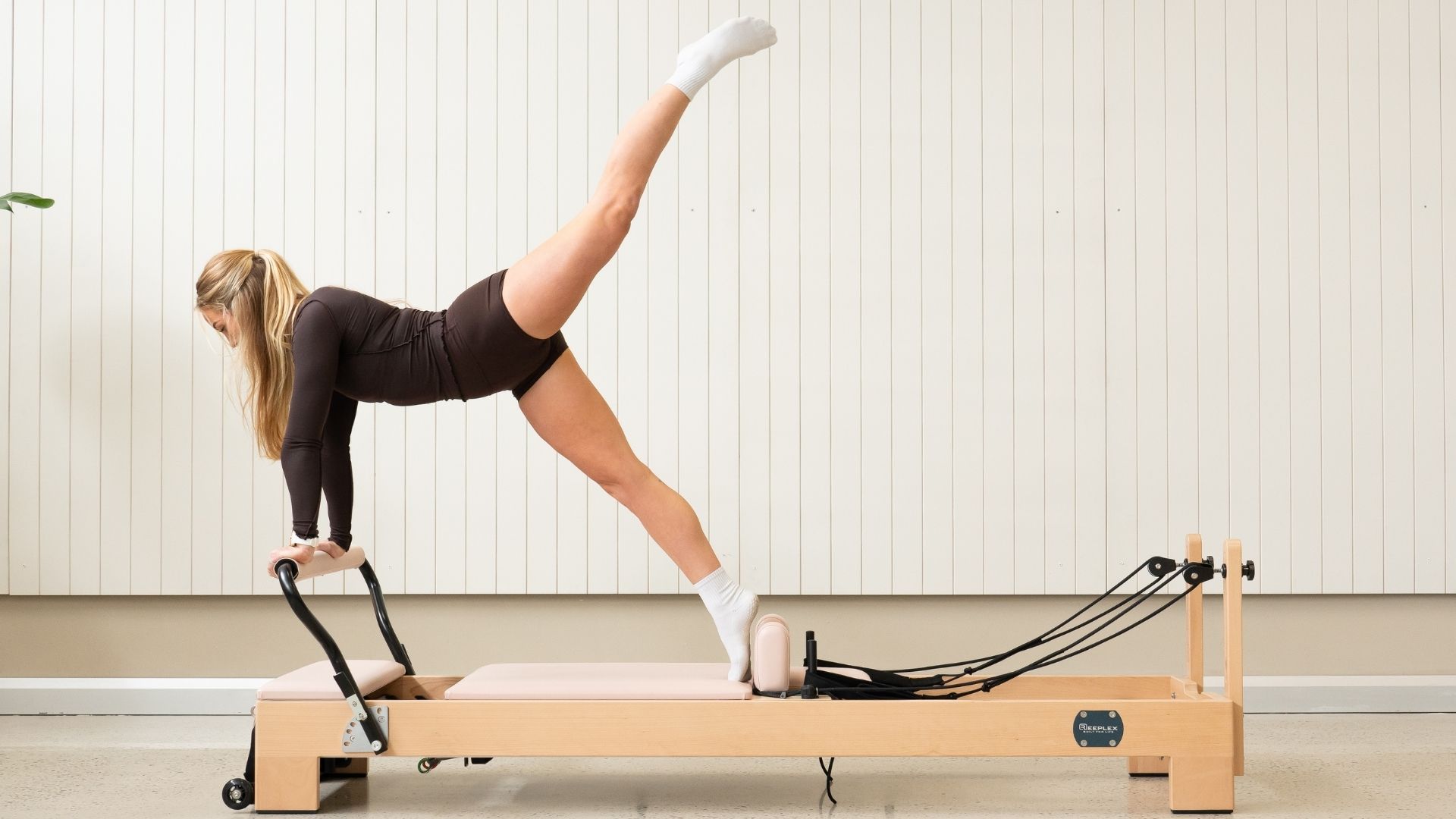
Reformer Pilates is performed on a pilates reformer machine — a sliding carriage system with adjustable spring resistance, a footbar, and rope-and-pulley attachments. The machine allows for hundreds of exercise variations across all planes of movement, with resistance that can be adjusted from very light to challenging.
Key Differences
Equipment
Mat Pilates requires only a mat and optionally small props like a resistance band or small ball. Reformer Pilates requires a reformer machine, which is a significant investment but provides a fundamentally different and more versatile training experience.
Resistance and Load
Mat Pilates uses bodyweight exclusively. Reformer Pilates adds spring resistance that can assist or resist movement depending on the exercise setup. This means the reformer can make exercises easier (by assisting the movement) or harder (by resisting it) — a level of adaptability mat work cannot replicate.
Exercise Range
Mat Pilates offers a solid repertoire of core and mobility exercises. Reformer Pilates offers several hundred exercise variations covering every major muscle group with standing, seated, kneeling, lying, and inverted positions. The reformer provides training possibilities that are simply not achievable on a mat.
Difficulty Adjustment
On a mat, difficulty is adjusted by changing body position or adding small props. On a reformer, difficulty is precisely adjusted by changing the spring resistance, making it easy to progress systematically and appropriate for complete beginners through advanced practitioners.
Joint Impact
Both methods are low impact. The reformer’s spring assistance can actually reduce joint load below bodyweight in some exercises, making it gentler for rehabilitation and injury recovery than mat work in certain situations.
Cost
Mat Pilates has virtually zero equipment cost. Reformer Pilates requires a machine investment, though this pays off quickly compared to ongoing studio membership costs for regular practitioners.
Which Burns More Calories?
Reformer Pilates typically results in greater calorie expenditure per session than mat Pilates due to the additional resistance load and larger muscle groups engaged across more complex movements. However, both methods focus primarily on strength, mobility, and conditioning rather than cardiovascular calorie burn.
Which is Better for Beginners?
Both are suitable for beginners. Mat Pilates has the advantage of zero equipment cost and can be started immediately. Reformer Pilates has the advantage of spring assistance which can actually make certain exercises more accessible for beginners by supporting the body through difficult movement ranges.
Many Pilates educators recommend starting with a few mat classes to learn foundational principles before transitioning to the reformer — but this is not essential.
Can You Do Both?
Absolutely — and many practitioners do. Mat Pilates complements reformer training well. The mat builds body awareness and foundational movement patterns. The reformer adds resistance, range, and variety. Using both creates a comprehensive, well-rounded Pilates practice.
Should You Buy a Reformer for Home Use?
If you are committed to regular Pilates practice, a home reformer offers significant long-term value. The versatility of a reformer far exceeds what mat practice alone can deliver, and owning the machine removes the cost and scheduling constraints of studio attendance.
Dynamo Fitness stocks a full range of pilates reformer machines for home use across all budgets. Visit a showroom across Australia to try both approaches and find the right fit for your practice.

Dynamo Fitness Equipment