Wall Ball Guide: Weights, Sizes and Workouts for Australian Gyms
The short answer: most men should start with a 9–10 kg wall ball and most women with a 6 kg — the CrossFit standards — while beginners do better one size down. In Australia a quality wall ball costs $80–$110 depending on weight (e.g. the Reeplex 6 kg wall ball, ~$85). Here’s how to pick the right weight, what makes a good one, and the workouts that earn it a place in your gym.
What is a wall ball (and what it isn’t)
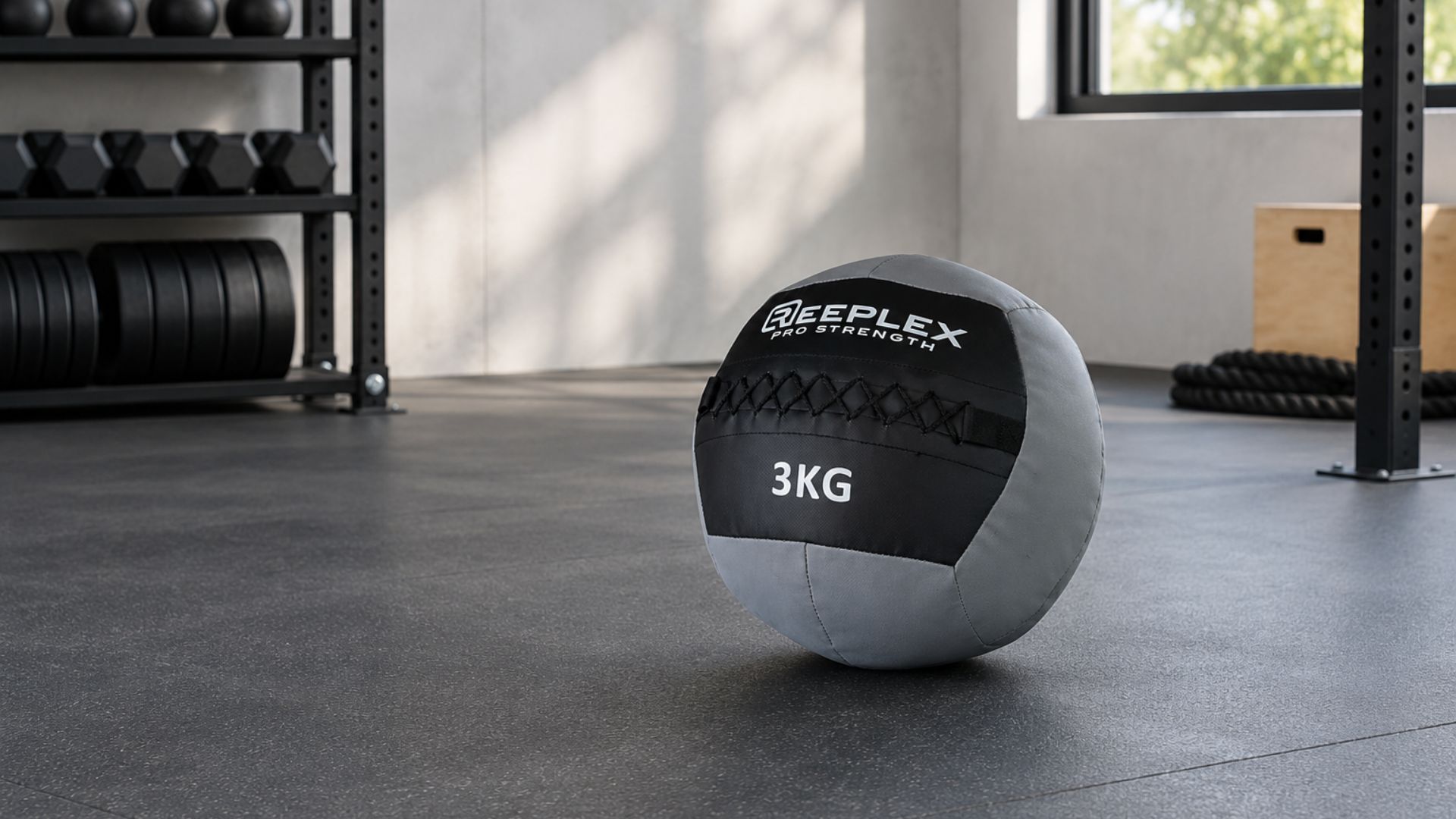
A wall ball is a large, soft-shelled weighted ball — typically around 35 cm across — built for throwing at a target and catching. The size stays the same across weights; only the density changes. That’s what separates it from its cousins: a medicine ball is smaller and firmer (better for twists and partner work), and a slam ball is a dead-bounce ball built to be smashed into the floor. If you try to slam a wall ball or throw a slam ball at a target, you’ll ruin the ball or the catch — buy for the movement you’ll actually do.
What weight wall ball should you buy?
| Who | Recommended weight | Price (Reeplex) |
|---|---|---|
| Beginners / general fitness (women) | 4 kg | ~$80 |
| Standard (women) / beginners (men) | 6 kg | ~$85 |
| Intermediate (men) | 8 kg | ~$90 |
| Standard (men) — closest to the 20 lb comp ball | 10 kg | ~$95 |
| Strong / strength-biased workouts | 12 kg | ~$100 |
| Heavy conditioning | 13 kg | ~$110 |
Prices are indicative and rounded – check the linked product pages for current pricing.
The honest buying advice: err lighter. Wall balls are a high-rep conditioning tool — a weight you can throw for 20 clean reps builds far more fitness than one you grind out in fives. Gyms and studios should buy pairs across 4–10 kg to cover every member.
What makes a good wall ball
- Stitching. Reinforced, recessed seams are the failure point on cheap balls — hundreds of catches a week destroys weak stitching.
- Grippy shell. A textured PVC or synthetic-leather shell you can catch confidently with sweaty hands.
- Consistent shape. Well-packed filling that doesn’t shift and turn the ball lopsided after a month.
- A target to aim at. The standard throw heights are 10ft (men) and 9ft (women) — a mounted wall ball target (~$110, rig-mounted) or freestanding target (~$150) keeps reps honest.
The workouts that earn it
- Wall balls (the classic): front squat into a throw at the target, catch, repeat. The most efficient full-body conditioning movement per dollar of equipment.
- Wall ball sit-ups: throw from the top of each sit-up to a partner or wall.
- Ball slams-to-target intervals: 30s on / 30s off for simple engine-building.
- Squat + press pairing for beginners: the ball teaches the squat-to-overhead timing barbell thrusters demand, at friendly loads.
- Group/PT circuits: one ball per station, no setup, scalable by handing someone a different weight.
Wall ball FAQs
How much does a wall ball cost in Australia?
Quality wall balls run $80–$110 AUD depending on weight (4–13 kg). Wall-mounted or freestanding targets add $110–$150.
What size wall ball for CrossFit?
The competition standards are 20 lb (~9 kg) for men and 14 lb (~6 kg) for women, thrown to 10ft and 9ft targets. In kg ranges, a 10 kg and a 6 kg ball are the closest matches.
Wall ball vs medicine ball — what’s the difference?
Same family, different jobs: wall balls are bigger, softer and made for throwing and catching at a target; medicine balls are smaller and firmer for rotational work, passes and floor exercises. The size of a wall ball stays constant across weights — only density changes.
Can I slam a wall ball?
No — the soft shell and stitching aren’t built for floor impact. Buy a dedicated slam ball for slams; you’ll wreck a wall ball within weeks.

Dynamo Fitness Equipment