
Weightlifting Platforms Australia: Build One or Buy One?
The short answer: if you deadlift or do Olympic lifts at home, you need something between the bar and your concrete slab. A ready-made platform like the Reeplex Weightlifting Platform (~$1,200) is the durable, no-thinking option; a DIY tile setup using 15 mm rubber gym tiles (~$30/m²) does the protective job for a few hundred dollars. Which one is right depends on how you lift.
Do you actually need a platform?
A platform does three jobs: protects the concrete (and your bumper plates) from repeated drops, deadens noise and vibration through the slab, and gives you a flat, consistent, grippy lifting surface. You need one if you:
- Deadlift with any intention of putting the bar down firmly (which is all deadlifting, eventually)
- Do Olympic lifts — cleans, snatches, jerks — where dropping the bar is part of the sport
- Lift in a rented home, upstairs room or strata garage where noise transfer matters
You don’t need one for machine work, dumbbells or pressing inside a rack — good gym flooring covers that.
Buying a platform: what you get
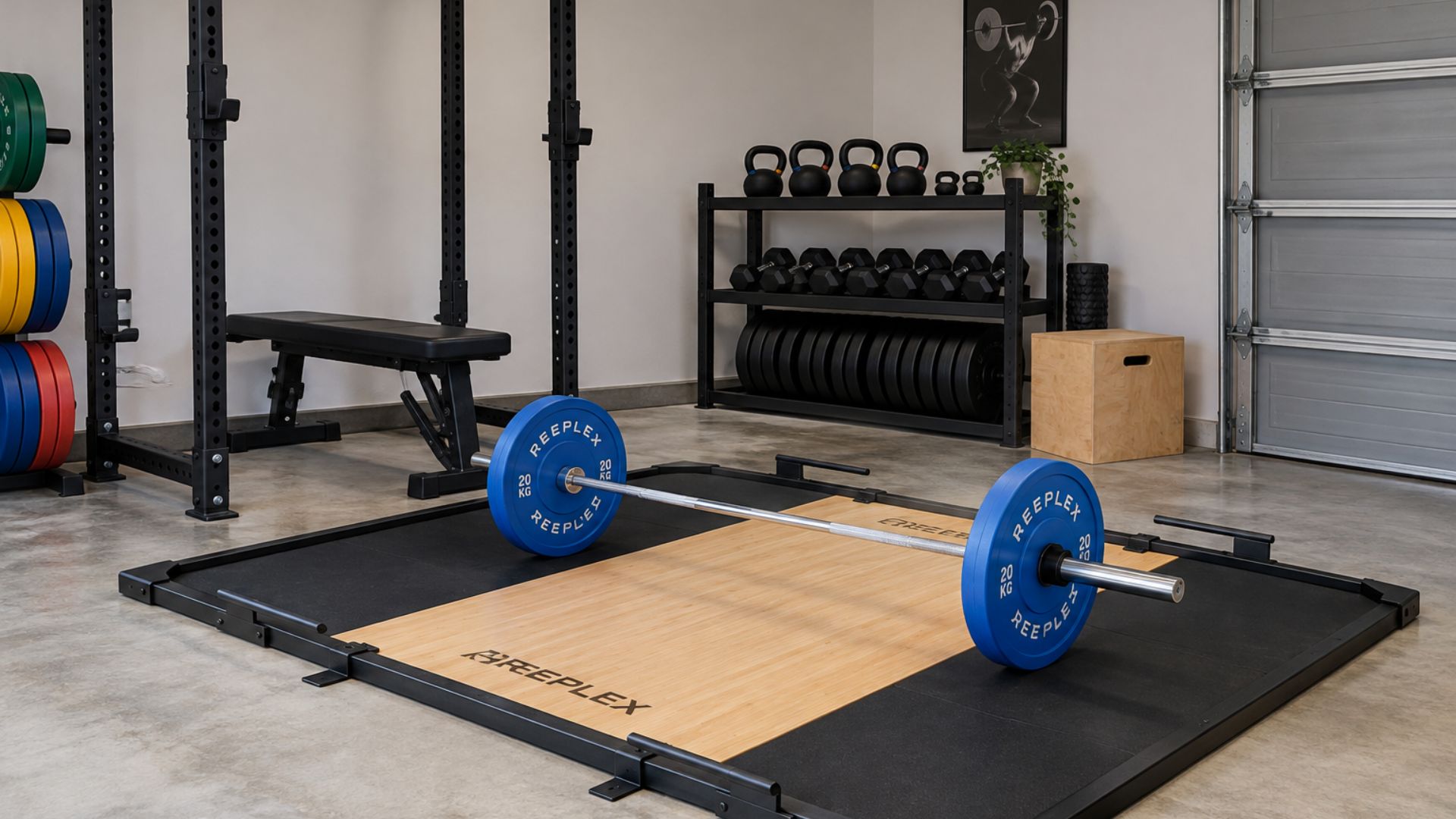
A commercial platform combines a timber centre strip (hard, flat and grippy underfoot) with rubber drop zones either side for the plates. The Reeplex Weightlifting Platform (~$1,200) is the standard configuration; premium options like Watson raised platforms are available on quotation for performance facilities. Standard platform footprints are roughly 2.4 m × 2.4–3 m — measure your space with a loaded bar’s width (2.2 m plus room to walk around it) in mind.
Building one: the honest DIY option
The classic DIY platform is two layers of structural ply (glued and screwed, layers perpendicular) topped with a ply centre strip and 15 mm rubber tiles on the drop zones. Rough cost in Australia: three to four sheets of ply plus four to six rubber tiles at ~$30 each — usually $350–$450 all-in and a weekend afternoon. It’s heavy, it works, and it’s the right call for a budget garage gym.
Where DIY falls short: edges chip and lift over time, it’s not pretty, and if you’re combining it with a rack you must plan bolt-through points before assembly. If the gym is a business — a PT studio or box — buy commercial; clients notice.
Build vs buy at a glance
| DIY (ply + rubber tiles) | Ready-made platform | |
|---|---|---|
| Cost | ~$350–$450 | ~$1,200 (Reeplex); premium POA |
| Time | An afternoon | Delivered, assemble in minutes |
| Durability | Good; edges wear first | Excellent, replaceable sections |
| Looks / client-facing | Garage-grade | Commercial-grade |
| Best for | Home lifters on a budget | Studios, clubs, serious home gyms |
Prices are indicative and rounded – check the linked product pages for current pricing.
Platform setup tips
- Pair it with bumpers. Iron plates and platforms are a bad marriage — bumper plates are what make dropping safe for the bar and the surface.
- Don’t put the rack on the drop zone. If you’re combining a platform with a power rack, the rack sits on the timber section or behind the platform entirely.
- Level matters more than thickness. A platform on an uneven slab rocks — shim it flat before you lift on it.
- Strata and rentals: a platform plus 15 mm tiles under it is the difference between lifting at 6am and a body-corporate letter.
Weightlifting platform FAQs
How much does a weightlifting platform cost in Australia?
Ready-made platforms start around ~$1,200 AUD; premium raised platforms for clubs are priced on application. A DIY ply-and-rubber build runs roughly $350–$450 in materials.
What size is a weightlifting platform?
The common footprint is about 2.4 m deep by 2.4–3 m wide — enough for a 2.2 m Olympic bar with drop zones either side. Allow walking room around it when planning the space.
Can I just use rubber tiles instead of a platform?
For deadlifts at moderate loads, thick (15 mm+) rubber tiles over concrete are acceptable. For Olympic lifting or frequent heavy drops, a platform’s layered construction spreads impact far better and protects both slab and plates.
Do I need a platform if I have bumper plates?
Bumpers protect the bar and soften impact, but repeated drops still hammer bare concrete and telegraph noise through the slab. Bumpers plus a platform (or thick tiles) is the complete answer.

Dynamo Fitness Equipment