
Gym Flooring Guide Australia: Rubber Tiles, Rolls and Jigsaw Mats Compared
The short answer: for a home gym with weights, 15 mm rubber tiles at ~$30 per square metre (1m × 1m rubber tiles) are the default answer — thick enough for dropped dumbbells and racks, modular, and easy to lay yourself. Rubber rolls suit bigger floors, and EVA jigsaw mats are for bodyweight and martial arts areas, not under iron. Here’s how to choose by activity, with real Australian pricing.
The three types of gym flooring
1. Rubber tiles — the home gym standard
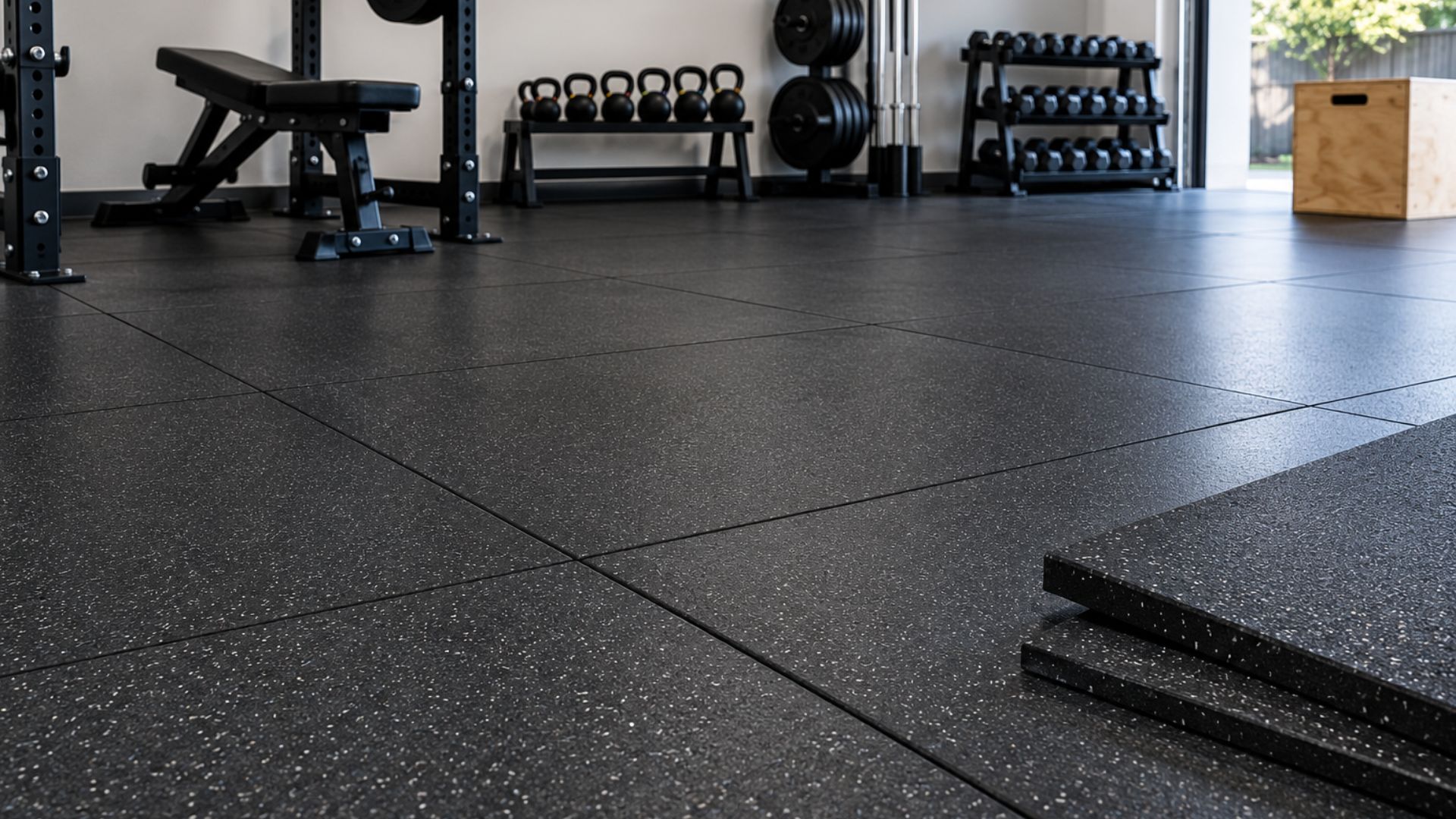
Dense 1m × 1m × 15 mm rubber squares laid loose or glued. Heavy enough to stay put, dense enough for weights, and modular — you floor only the area you train on and replace single tiles if one ever wears. ~$30 per tile in plain black or fleck colours.
2. Rubber rolls — for bigger floors
Continuous 1m-wide rubber, fewer seams, faster coverage for studios and garages being fully floored. The Reeplex 1m × 10m roll is ~$400 — ~$40 per square metre laid in one piece, in black or fleck colours.
3. EVA jigsaw mats — bodyweight and martial arts only
Interlocking foam, softer and cheaper: 20 mm tatami jigsaw mats at ~$25/m² for stretching, HIIT and kids’ areas, and 40 mm versions (~$45/m²) plus 2m × 1m judo tatami (~$200) for throws and grappling. Foam dents permanently under racks and plates — never use it in the weights area.
Which flooring for which activity
| Activity | Flooring | Thickness | Cost per m² |
|---|---|---|---|
| Racks, benches, dumbbells | Rubber tiles | 15 mm | ~$30 |
| Deadlifts & dropped bumpers | Rubber tiles (consider doubling under the bar) or a lifting platform | 15 mm+ | ~$30+ |
| Cardio machines | Rubber tiles or roll | 15 mm | $29.99–$38.90 |
| Full studio/garage coverage | Rubber roll | 15 mm | ~$40 (10m² roll ~$400) |
| Stretching, HIIT, kids | EVA jigsaw mats | 20 mm | ~$25 |
| Martial arts / grappling | EVA 40 mm or judo tatami | 40 mm | $45–$100 |
Prices are indicative and rounded – check the linked product pages for current pricing.
How much flooring do you need?
- Rack + lifting area: 6–9 tiles (2×3m or 3×3m) covers a squat rack, bench and bar path — about $180–$270.
- Single garage gym: 15–18 m² for wall-to-wall — two 10m rolls (~$800) or ~16 tiles (~$500).
- Under one cardio machine: 2 tiles (~$60) kills vibration and protects the slab from feet and sweat.
Laying it: five tips from the warehouse
- Loose-lay first. 15 mm rubber is heavy enough that home gyms rarely need adhesive; glue only high-traffic commercial floors.
- Let it acclimatise — rubber expands slightly; leave tiles in the room a day before final trimming at walls.
- Sharp Stanley blade + straight edge cuts rubber cleanly in several passes; cut from the back.
- Rubber smell fades. New recycled rubber has an odour for a week or two — air the room; it goes.
- Under a platform or rack, thicker isn’t always better: racks want firm, stable footing — 15 mm dense rubber beats soft thick foam every time.
Browse the full gym flooring range and jigsaw mats online — or see and feel the difference between rubber densities at Dynamo showrooms nationwide.
Gym flooring FAQs
How much does gym flooring cost in Australia?
Rubber tiles are ~$30 per square metre (15 mm, 1m × 1m), rubber rolls work out at ~$40/m² (~$400 per 1m × 10m roll), and EVA jigsaw mats start at ~$25/m². A typical rack area costs $180–$270 to floor.
How thick should gym flooring be?
15 mm dense rubber is the sweet spot for home gyms with weights. Go thicker (or add a platform) where bumpers are dropped from height; 20–40 mm EVA foam is for bodyweight and martial arts areas only.
Can I put gym flooring on carpet?
Yes for tiles under light equipment — but racks and heavy lifting want a firm base, and carpet underneath makes everything slightly unstable. On carpet, use large rigid tiles, keep lifting light, or better, choose a concrete-floored space.
Are jigsaw mats OK under weights?
No. EVA foam compresses and dents permanently under racks, benches and plates. Use dense rubber in any weights area and keep foam for stretching, HIIT and martial arts zones.

Dynamo Fitness Equipment